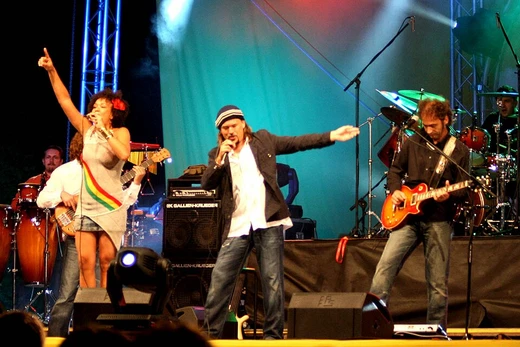
Tom Waits
American singer-songwriter known for his gravelly voice and lyrics about society's underbelly.

Thomas Alan Waits (born December 7, 1949) is an American singer, songwriter, composer and actor. His lyrics often focus on society's underbelly and are delivered in his trademark deep, gravelly voice. He began in the folk scene during the 1970s, but his music since the 1980s has reflected the influence of such diverse genres as rock, jazz, Delta blues, opera, vaudeville, cabaret, funk and experimental techniques verging on industrial music.
- born
- December 7, 1949, Pomona, California
- field
- Singer, songwriter, composer, actor
- nationality
- American
- known_for
- Deep, gravelly voice; lyrics about society's underbelly; eclectic musical style
Verified Timeline
Lore & Background
Tom Waits was born into a middle-class family in Pomona, California, who then moved to Whittier in 1949. His family lived on Kentucky Avenue (and briefly Pickering Avenue), a pivotal setting for his memories. Inspired by the work of Bob Dylan and the Beat Generation, he began singing on the San Diego folk circuit. He moved to Los Angeles in 1972, where he worked as a songwriter before signing a recording contract with Asylum Records. His debut album was Closing Time (1973), followed by The Heart of Saturday Night (1974) and Nighthawks at the Diner (1975). He toured the United States, Europe, and Japan, finding greater critical and commercial success with Small Change (1976), Blue Valentine (1978), and Heartattack and Vine (1980). In 1978, Waits entered the world of film, where he met Kathleen Brennan. He collaborated with Crystal Gayle on the soundtrack of Francis Ford Coppola’s One From the Heart (1982) and made cameos in several Coppola films. In 1980, Waits married Brennan, split from his manager and record label, and moved to New York City. With Brennan's encouragement and frequent collaboration, he pursued a more eclectic and experimental sound influenced by Harry Partch and Captain Beefheart, as heard on the loose trilogy Swordfishtrombones (1983), Rain Dogs (1985) and Franks Wild Years (1987). In 1990, he collaborated with theater director Robert Wilson on the musical The Black Rider, the songs for which were released on the album of the same name. Waits and Wilson reunited for the musicals Alice (1992) and Woyzeck (2000). In 2002, the songs from the two musicals were released on the albums Alice and Blood Money. Waits won Grammys for Best Alternative Music Album and Best Contemporary Folk Album for Bone Machine (1992) and Mule Variations (1999). Waits went on to release Real Gone (2004), the compilation Orphans: Brawlers, Bawlers & Bastards (2006), the live album Glitter and Doom Live (2009) and Bad as Me (2011). Waits has not toured since 2008 and has not issued a new album since 2011, though he continues to make isolated (and widely spaced) appearances guesting at concerts and special events. He also has published poetry and has continued his acting career, encompassing a range of offbeat character roles.
Reader's Guide
Tom Waits has influenced many artists and gained an international cult following. His songs have been covered by Bruce Springsteen, Tori Amos, Rod Stewart, and the Eagles and he has written songs for Johnny Cash and Norah Jones among others. In 2011, he was inducted into the Rock and Roll Hall of Fame. Introducing him, Neil Young said 'This next man is indescribable, and I'm here to describe him. He's sort of a performer, singer, actor, magician, spirit guide, changeling...' Accepting the honor, Waits mused: 'They say that I have no hits and I'm difficult to work with. And they say that like it's a bad thing!' Jim Fusilli calls him 'A keen, sensitive and sympathetic chronicler of the adrift and downtrodden' who 'creates three-dimensional characters who, even in their confusion and despair, are capable of insight and startling points of view.' His unique voice was described by Daniel Durchholz as sounding 'like it was soaked in a vat of bourbon, left hanging in the smokehouse for a few months, and then taken outside and run over with a car.'
Did You Know?
- Waits was born into a middle-class family in Pomona, California, and moved to Whittier in 1949.
- He began singing on the San Diego folk circuit, inspired by Bob Dylan and the Beat Generation.
- His debut album was Closing Time (1973), followed by The Heart of Saturday Night (1974) and Nighthawks at the Diner (1975).
- He won Grammys for Best Alternative Music Album and Best Contemporary Folk Album for Bone Machine (1992) and Mule Variations (1999).
- Waits has not toured since 2008 and has not issued a new album since 2011.
Frequently Asked Questions
Who is Tom Waits?
Thomas Alan Waits is an American singer, songwriter, composer, and actor born on December 7, 1949, in Pomona, California. He is best recognized for his deeply textured, gravelly vocal delivery and for weaving together rock, jazz, blues, cabaret, and experimental sounds into a singular artistic voice.
What makes Tom Waits's voice so distinctive?
His trademark deep, raspy, gravelly tone sets him apart from virtually every other solo artist in pop and rock. That rough, almost weathered quality has become his signature, even as his musical palette shifts from folk roots to industrial-tinged experimentation.
What kinds of music does Tom Waits blend together?
Starting from a 1970s folk foundation, his work from the 1980s onward draws on rock, jazz, Delta blues, opera, vaudeville, cabaret, funk, and experimental techniques that sometimes edge into industrial territory. No single genre can pin down his sound.
What themes do Tom Waits's lyrics explore?
His songwriting consistently turns its attention to the margins of society—drifters, outcasts, and the gritty underbelly of everyday life. Rather than celebrating the mainstream, he gives voice to the overlooked and the broken.
When did Tom Waits first start his music career?
He entered the music world through the folk scene in the 1970s before gradually expanding into a far more eclectic and experimental direction. His evolution from folk to a genre-defying blend is one of the most distinctive arcs in solo pop and rock history.
More in Pop & Rock Solo Artists 1-22
Spotted an error? Know more?
This is a living reference — every entry is fact-audited, and reader corrections feed straight into our audit queue. Suggest an edit · See this site's audit record