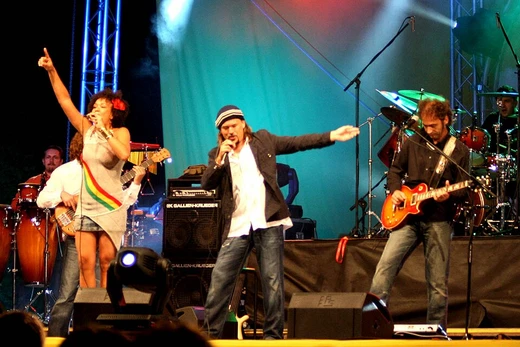
Burt Bacharach
American composer of orchestral pop and easy listening.

Raph_PH · CC BY 2.0
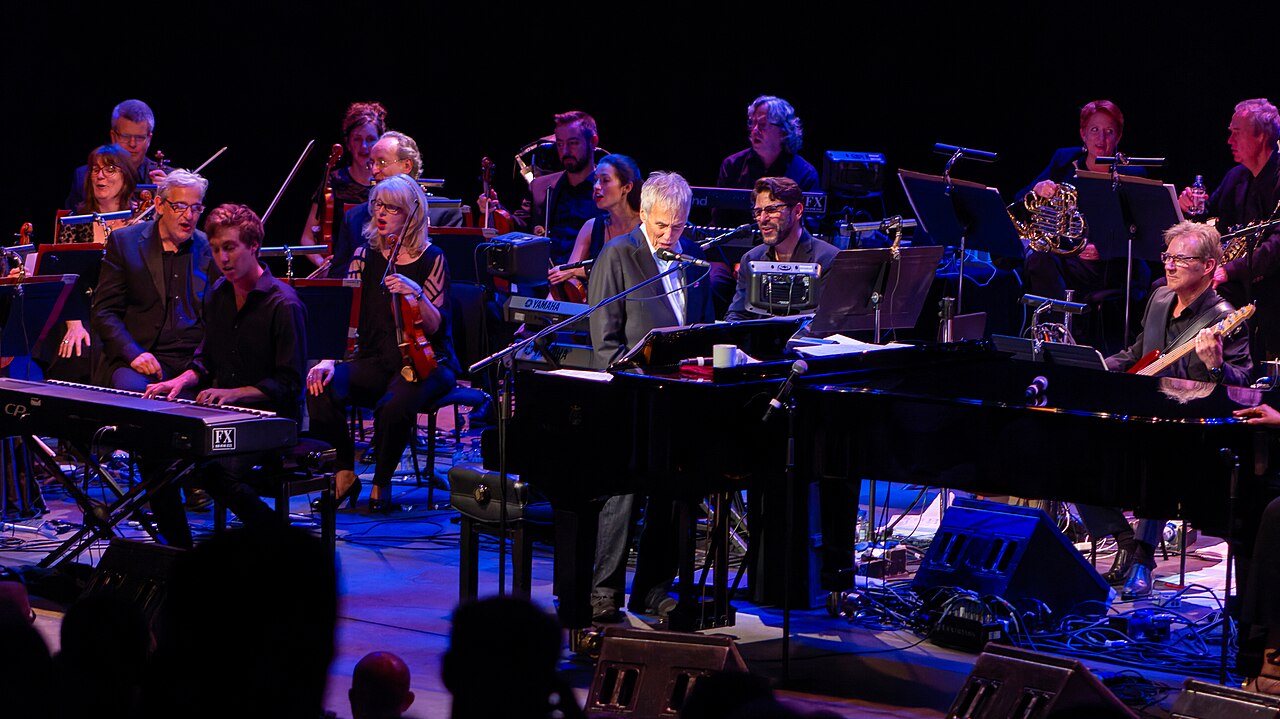
Burt Freeman Bacharach (May 12, 1928 – February 8, 2023) was an American composer, songwriter, record producer, and pianist, widely regarded as one of the most important and influential figures of 20th-century popular music. A significant figure in orchestral pop and easy listening, he composed hundreds of songs, many in collaboration with lyricist Hal David, and arranged, conducted, and produced much of his recorded output. His music often contained atypical chord progressions and time signature changes, influenced by his background in jazz, and uncommon selections of instruments for small orchestras.
- known_for
- Songwriting partnership with Hal David; composing fifty-two U.S. Top 40 hits inc
Verified Timeline
Lore & Background
Bacharach was born in Kansas City, Missouri, and grew up in Forest Hills, Queens, New York City, graduating from Forest Hills High School in 1946. He was the son of Irma M. (née Freeman) and Mark Bertram 'Bert' Bacharach, a well-known syndicated newspaper columnist. His mother was an amateur painter and songwriter and encouraged Bacharach to practice piano, drums and cello during his childhood. His family was Jewish, but he said that they did not practice or give much attention to Judaism. Bacharach showed a keen interest in jazz as a teenager, disliking his classical piano lessons, and often used a fake ID to gain admission into 52nd Street nightclubs. He studied music (Associate of Music, 1948) at McGill University in Montreal, at the Mannes School of Music in New York City, and at the Music Academy of the West in Montecito, California. His composition teachers included Darius Milhaud, Henry Cowell, and Bohuslav Martinů. Bacharach cited Milhaud, under whose guidance he wrote a 'Sonatina for Violin, Oboe and Piano', as his greatest influence. Bacharach was drafted into the U.S. Army in the late 1940s and served for two years, playing piano in officers' clubs in Germany, Fort Dix, and Governors Island. He met singer Vic Damone while both were serving in the army in Germany. Following his discharge, Bacharach spent the next three years as a pianist and conductor for Damone. In 1956, composer Peter Matz recommended him to Marlene Dietrich, who needed an arranger and conductor for her nightclub shows. He became a part-time music director for Dietrich, touring worldwide off and on until the early 1960s. Also in 1956, Bacharach and lyricist Hal David, both working in the Brill Building for Famous Music, published their first songs as co-writers. Their career breakthrough came with 'The Story of My Life' (1957) recorded by Marty Robbins, and 'Magic Moments' (1958) recorded by Perry Como. Most of their songs were tailored for Dionne Warwick from 1961 to 1972. Bacharach fully directed recordings beginning with Jerry Butler's 'Make It Easy on Yourself' (1962). He expanded into film and stage work with songs and scores for 'What's New Pussycat?' (1965), 'Butch Cassidy and the Sundance Kid' (1968), and the Broadway musical 'Promises, Promises' (1968). After the commercial failure of 'Lost Horizon' (1973), his partnership with David ended, and his collaboration with Warwick was interrupted by lawsuits. He later returned to prominence through work with Carole Bayer Sager and Elvis Costello.
Reader's Guide
Burt Bacharach's significance lies in his transformation of popular song structure and production. His compositions, often written with lyricist Hal David, featured atypical chord progressions and time signature changes drawn from his jazz background, and he used uncommon instrument selections for small orchestras. Over a thousand musicians have recorded his songs, and his recordings have appeared in numerous major feature films. He received six Grammy Awards, three Academy Awards, and one Emmy Award. His work informed the development of later music styles such as sunshine pop/soft rock, chamber pop, and Shibuya-kei. In total, he composed fifty-two U.S. Top 40 hits between 1957 and 1987, including six chart-toppers: 'This Guy's in Love with You' (Herb Alpert, 1968), 'Raindrops Keep Fallin' on My Head' (B. J. Thomas, 1969), '(They Long to Be) Close to You' (the Carpenters, 1970), 'Arthur's Theme (Best That You Can Do)' (Christopher Cross, 1981), 'That's What Friends Are For' (Dionne Warwick, 1986), and 'On My Own' (Carole Bayer Sager, 1986). In 2012, Bacharach and David were the first songwriting team to receive the Library of Congress Gershwin Prize for Popular Song. They were ranked at number 32 on Rolling Stone's 2015 list of the '100 Greatest Songwriters of All Time'.
Did You Know?
- Bacharach used a fake ID as a teenager to gain admission into 52nd Street nightclubs to hear bebop musicians like Dizzy Gillespie and Charlie Parker.
- He studied under composers Darius Milhaud, Henry Cowell, and Bohuslav Martinů, and cited Milhaud as his greatest influence.
- Bacharach and Hal David wrote over 230 songs together between 1956 and the mid-1970s.
- He was drafted into the U.S. Army in the late 1940s and played piano in officers' clubs in Germany, Fort Dix, and Governors Island.
- In 2012, Bacharach and David were the first songwriting team to receive the Library of Congress Gershwin Prize for Popular Song.
Gallery
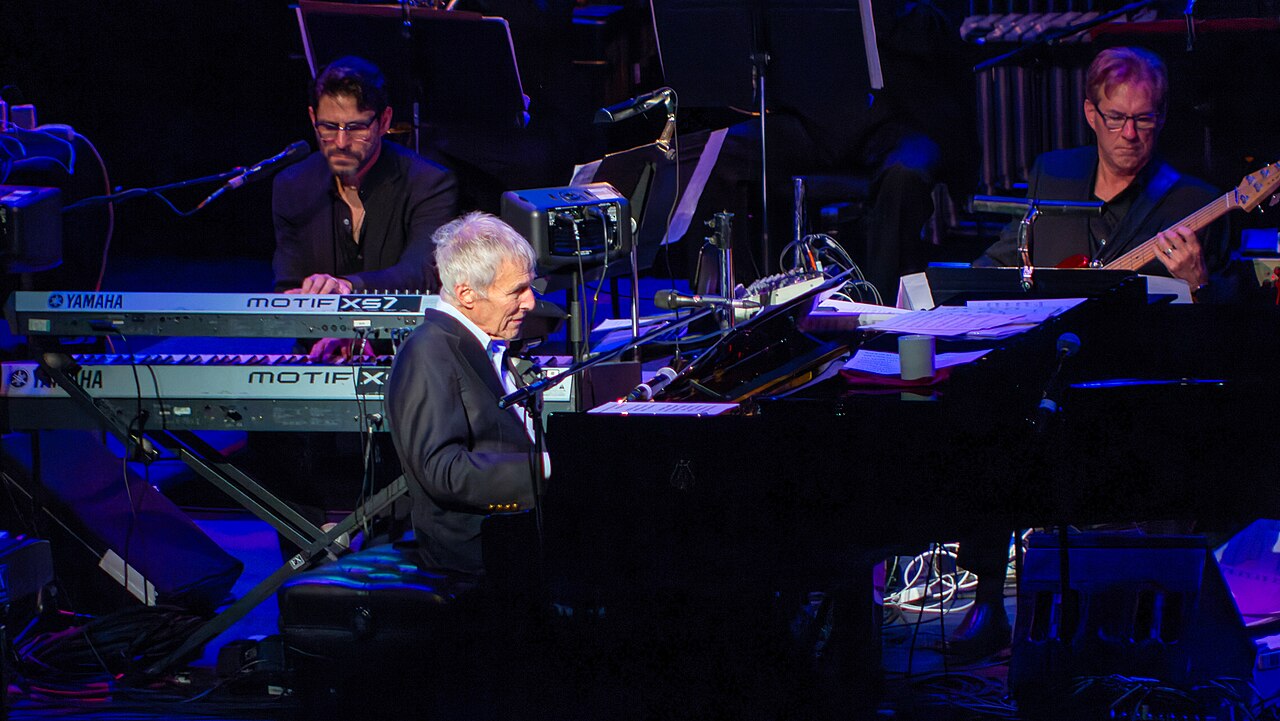
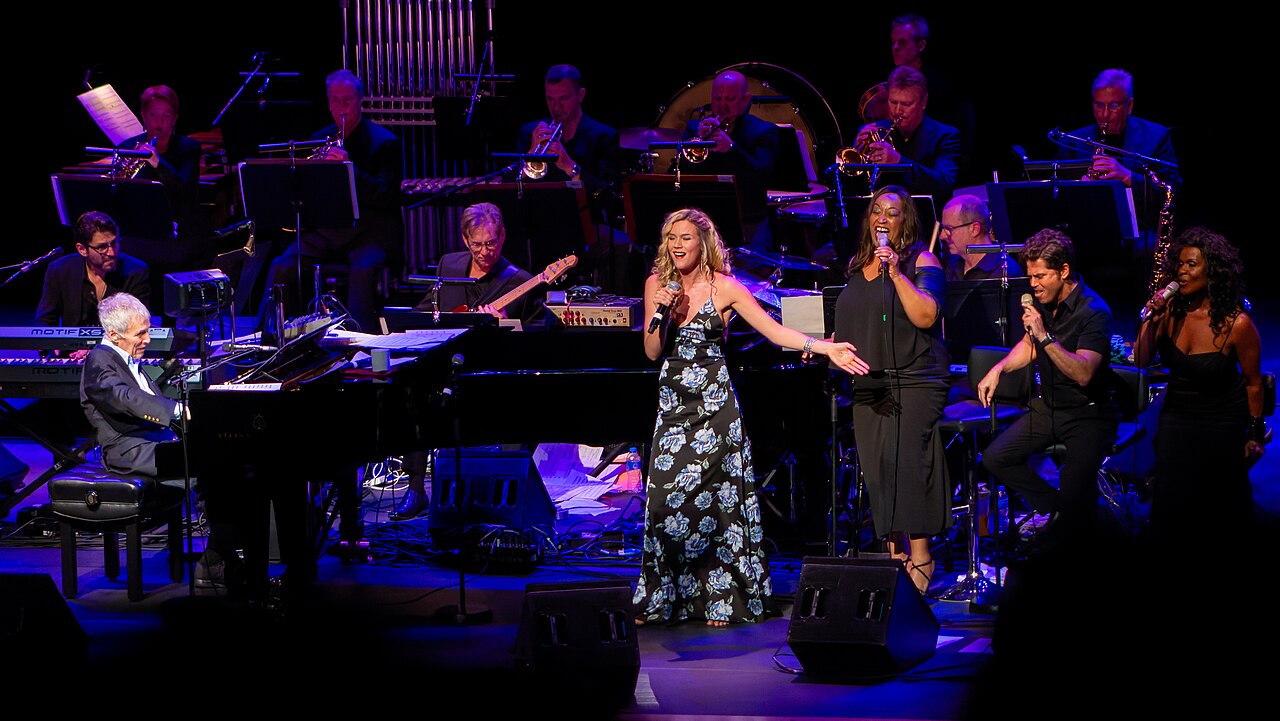
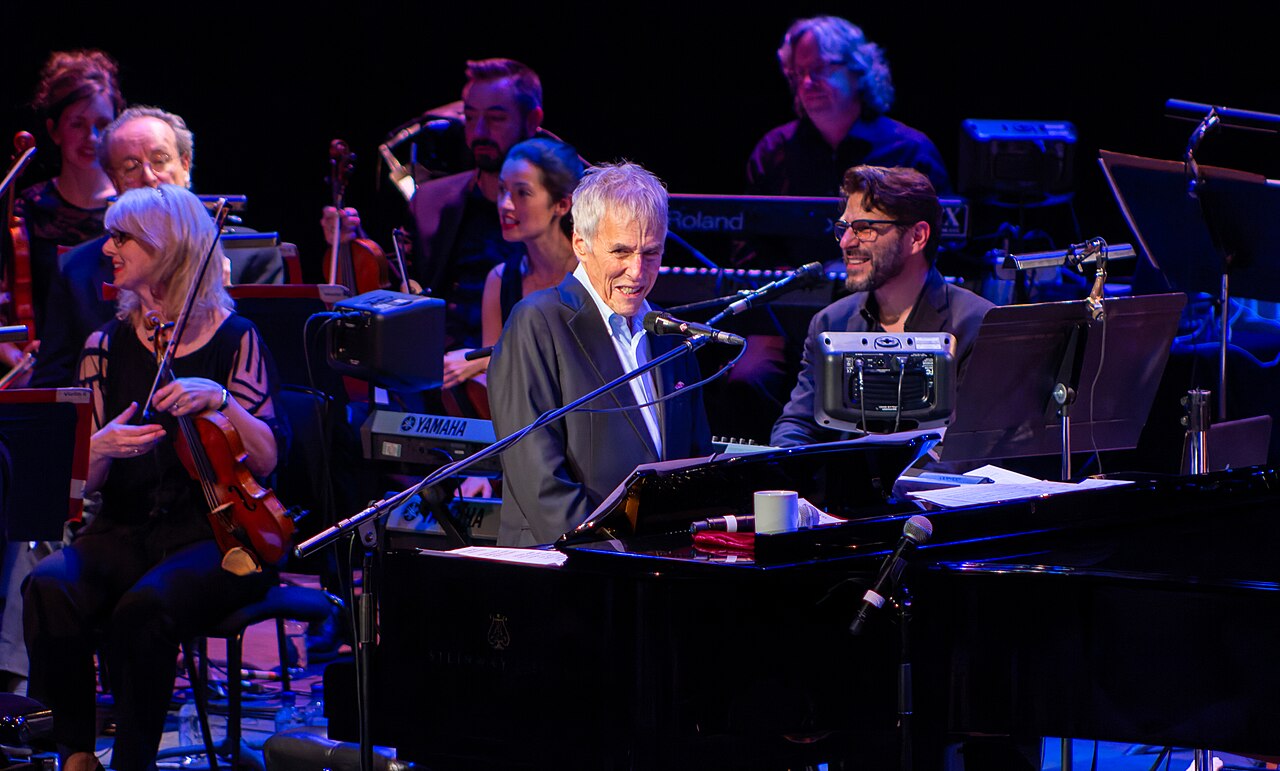
Frequently Asked Questions
Who is Burt Bacharach?
Burt Bacharach (1928–2023) was an American composer, pianist, and record producer best known for shaping the sound of mid-century orchestral pop and easy listening. He wrote, arranged, and produced hundreds of songs, many of which became defining tracks of the 1960s.
Who was Burt Bacharach's main songwriting partner?
He teamed up with lyricist Hal David in a partnership that yielded fifty-two U.S. Top 40 hits, including nine number-one singles. Together they wrote enduring standards such as "Walk on By" and "Raindrops Keep Fallin' on My Head."
What made Burt Bacharach's music sound different from other pop of his era?
His songs often featured jazz-influenced chord progressions, unexpected time-signature shifts, and unconventional instrumental pairings for small ensembles. These harmonic and textural choices gave his melodies a distinctive, almost cinematic quality that set them apart from straightforward rock-and-roll or simple pop formulas.
Did Burt Bacharach compose for film and Broadway?
Yes, beyond the recording studio he wrote scores for several Hollywood films and contributed music to Broadway productions. That cross-medium work reinforced his reputation as a versatile composer whose talent extended well beyond the pop singles chart.
When did Burt Bacharach die and why is he still considered important?
He passed away on February 8, 2023, at age 94. His catalog and harmonic language are widely regarded as a foundational pillar of twentieth-century popular music, continuing to influence songwriters, producers, and arrangers to this day.
More in Pop & Rock Solo Artists 1-22
Spotted an error? Know more?
This is a living reference — every entry is fact-audited, and reader corrections feed straight into our audit queue. Suggest an edit · See this site's audit record