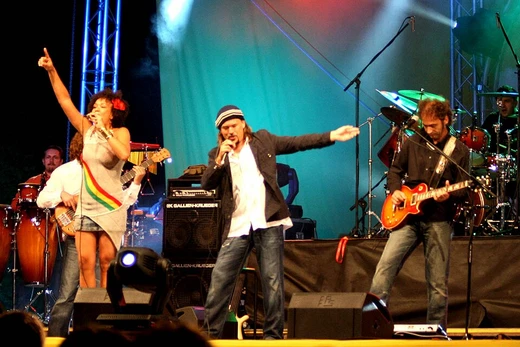
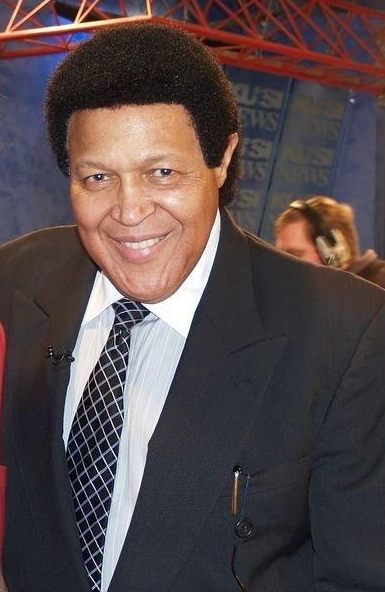
Chubby Checker
American singer who popularized the Twist dance.

Philkon Phil Konstantin · Public domain
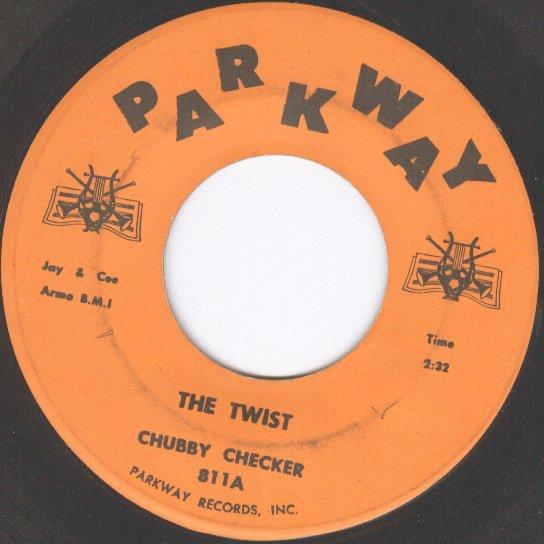
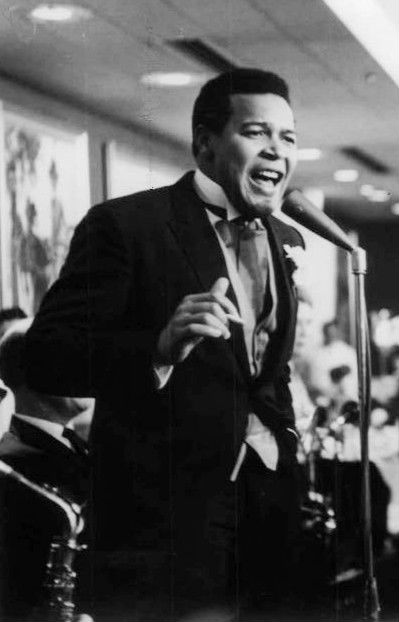
Chubby Checker is an American singer and dancer. He is best known for his 1960 cover version of "The Twist," which reached number one on the Billboard Hot 100 on September 19, 1960, where it stayed for one week and then went on to set a record at the time as the only song to reach number one during two different chart runs when it resurfaced and topped the Hot 100 again for two weeks starting on January 13, 1962. Checker's version featured Buddy Savitt on saxophone and Ellis Tollin on drums, with backing vocals by the Dreamlovers. Exposure for the song on American Bandstand and on The Dick Clark Saturday Night Show helped propel the song to the top of the American charts.
- field
- Singer, dancer
- nationality
- American
- known_for
- Popularizing the Twist and other dance styles
Verified Timeline
Lore & Background
Chubby Checker's version of "The Twist" was recorded after Dick Clark attempted to book Hank Ballard to perform on American Bandstand. Ballard was unavailable, and Clark searched for a local artist to record the song. He settled on Checker, whose voice was very similar to Ballard's. In July 1960, Checker performed "The Twist" for the first time in front of a live audience at the Rainbow Club in Wildwood, New Jersey, and just weeks later, on August 6, 1960, the song became a national sensation after Checker performed it on Dick Clark's American Bandstand. In late 1961 and early 1962, the twist craze belatedly caught on in high society. Sightings of celebrities doing the dance made the song a hit with adults, particularly after a report in the Cholly Knickerbocker gossip column. This new interest made "The Twist" the first recording to hit number one on the United States charts during two separate chart runs, and marked a major turning point for adult acceptance of rock and roll music. Checker re-recorded the song numerous times. An updated 1982 recording (from his album The Change Has Come) was retitled "T-82", and in the 1990s, he recorded a country version. In the late 1970s, he recorded a new version that, except for the sound mix and some minor arrangement changes, was identical to the 1960 original. In 1988, he joined The Fat Boys on a rap version of the song, which hit number 2 in the UK, number 16 in the US, and number 1 in Germany and Switzerland. Checker also joined the group to perform the song that summer at a London tribute concert for Nelson Mandela. He also recorded variations on the theme, such as "Let's Twist Again" to keep the craze alive.
Reader's Guide
Chubby Checker's significance lies in his role as the performer of "The Twist," a song that set a record at the time as the only song to reach number one during two different chart runs on the Billboard Hot 100. His version was chosen by Dick Clark after Hank Ballard was unavailable. Checker's performance on American Bandstand on August 6, 1960, turned the song into a national sensation. The twist craze later caught on with adults in late 1961 and early 1962, after celebrity sightings and a report in the Cholly Knickerbocker gossip column, making "The Twist" a major turning point for adult acceptance of rock and roll music. Checker's 1988 collaboration with The Fat Boys on a rap version of the song reached number 2 in the UK, number 16 in the US, and number 1 in Germany and Switzerland. He also recorded variations like "Let's Twist Again." On Billboard's list of all-time No. 1 Hot 100 singles, "The Twist" held the top position from 2008 until September 2020, when "Blinding Lights" by the Weeknd took over. In 2014, Billboard magazine declared the song the "biggest hit" of the 1960s. In 2018, Checker's version was one of six singles inducted into the Rock and Roll Hall of Fame in a new category honoring singles by artists who have not been elected to the Hall.
Did You Know?
- Chubby Checker's version of "The Twist" was the first recording to hit number one on the United States charts during two separate chart runs.
- Checker performed "The Twist" for the first time in front of a live audience at the Rainbow Club in Wildwood, New Jersey, in July 1960.
- In 1988, Checker joined The Fat Boys on a rap version of "The Twist," which hit number 1 in Germany and Switzerland.
- On Billboard's list of all-time No. 1 Hot 100 singles, "The Twist" held the top position from 2008 until September 2020.
- In 2018, Checker's version of "The Twist" was one of six singles inducted into the Rock and Roll Hall of Fame in a new category.
From Baltimore to National Stardom
The road to Checker's signature hit began not in a recording studio but on a local television set. A Baltimore dance show hosted by DJ Buddy Deane introduced "The Twist" to a wider audience, and Deane passed the recommendation to Dick Clark, who hosted the nationally broadcast American Bandstand out of Philadelphia. Clark wanted Hank Ballard himself on the show, but Ballard was unavailable. Clark then looked for a local artist whose vocal timbre matched Ballard's and settled on Checker. The song's momentum built in stages: Checker first performed it live at the Rainbow Club in Wildwood, New Jersey, in July 1960, and just weeks later, on August 6, his rendition on American Bandstand ignited a national sensation. Exposure on both American Bandstand and Clark's Saturday Night Show carried the track to the summit of the Billboard Hot 100 on September 19, 1960. Checker's backing band included saxophonist Buddy Savitt, drummer Ellis Tollin, and the Dreamlovers on vocals, lending the performance a polished, radio-ready sheen that distinguished it from Ballard's looser original.
The Dance That Conquered High Society
What began as a teenage fad in Florida and a modest R&B B-side transformed into a full-blown cultural phenomenon when the twist crept into the world of celebrities and old money. In late 1961 and into early 1962, gossip columns—most notably the Cholly Knickerbocker—began reporting sightings of prominent figures working the dance floor, and the news sent shockwaves through adult social circles. The Peppermint Lounge in New York became the epicenter, drawing long lines of fashionable patrons eager to twist alongside their idols. This belated embrace by high society gave "The Twist" a second life on the charts: it returned to number one on the Hot 100 for two weeks beginning January 13, 1962, making it the first recording ever to top the chart during two separate runs. That distinction would stand unchallenged for nearly 59 years, until Mariah Carey's "All I Want for Christmas Is You" achieved the same feat in December 2020. Beyond the chart milestone, the episode marked a genuine turning point in how mainstream American adults received rock and roll, signaling that the genre had crossed a cultural boundary it might never have crossed on its own.
A Song Born on a B-Side
The origins of "The Twist" are tangled with questions of authorship and the quirks of 1950s record production. Hank Ballard reportedly wrote the song after watching teenagers in Tampa, Florida, working the twist dance, though Midnighters member Lawson Smith later claimed that Nathaniel Bills of The Gospel Consolaters actually composed it and that Ballard appropriated the material. Whatever the truth, Ballard and partner Green built the new lyrics atop an existing melody they had previously used for "Is Your Love for Real." An early, loose take was cut in a Florida studio for Vee-Jay Records in early 1958, with Green playing guitar in a Jimmy Reed style, but that version sat unreleased until it appeared on a 1993 box set. The definitive recording was not made until November 11, 1958, in Cincinnati. Ballard believed "The Twist" was the obvious A-side, but King Records producer Henry Glover, who had written the ballad "Teardrops on Your Letter" himself, insisted it lead the single. The twist became the B-side, yet it still managed to peak at number 28 on the Hot 100 in 1960 and surpass one million in sales by 1962, becoming Ballard's fourth million-selling record.
A Song That Refused to Stay Still
Checker maintained an extraordinary, decades-long relationship with his signature track, re-recording it in virtually every musical style imaginable. In the late 1970s he cut a version so close to the 1960 original—identical save for the sound mix and minor arrangement tweaks—that it is frequently mislabeled as the original on compilation albums. A 1982 update was retitled "T-82" for his album The Change Has Come, and in the 1990s he delivered a country-flavored take. Perhaps the most surprising reinvention came in 1988, when he joined hip-hop trio The Fat Boys for a rap version that reached number two in the UK, number sixteen in the US, and number one in both Germany and Switzerland. That same summer, the collaboration was performed at a London tribute concert honoring Nelson Mandela. Checker also kept the twist alive with follow-up singles like "Let's Twist Again," which paradoxically outperformed the original in the United Kingdom. The song's endurance was recognized in 2014 when Billboard named it the biggest hit of the 1960s, and it held the top spot on Billboard's all-time No. 1 Hot 100 list from 2008 until the Weeknd's "Blinding Lights" dethroned it in September 2020.
Gallery
Frequently Asked Questions
Who is Chubby Checker?
Chubby Checker, born Ernest Evans in 1941, is an American rock and roll singer and dancer. He became a global cultural figure in the early 1960s by turning dance into a mass entertainment phenomenon.
What is Chubby Checker most famous for?
He is best known for his 1960 cover of "The Twist," which ignited a worldwide dance craze and reached number one on the Billboard Hot 100 on two separate occasions. The song made him a household name and defined party culture for an entire generation.
What other dances did Chubby Checker popularize?
Beyond the Twist, he brought the Pony, the Fly, and the Limbo into mainstream visibility. These routines became staples of 1960s dance floors and television performances.
Has Chubby Checker won any major awards?
Yes—his 1961 follow-up single "Let's Twist Again" earned him a Grammy Award at the 4th Annual Grammy Awards ceremony held in 1962.
What is Chubby Checker's real name and birth date?
His birth name is Ernest Evans, and he was born on October 3, 1941. He adopted the stage name Chubby Checker early in his career to match his energetic, larger-than-life performance style.
More in Pop & Rock Solo Artists 1-22
Spotted an error? Know more?
This is a living reference — every entry is fact-audited, and reader corrections feed straight into our audit queue. Suggest an edit · See this site's audit record